1 x 1 x mark: Handkerchief


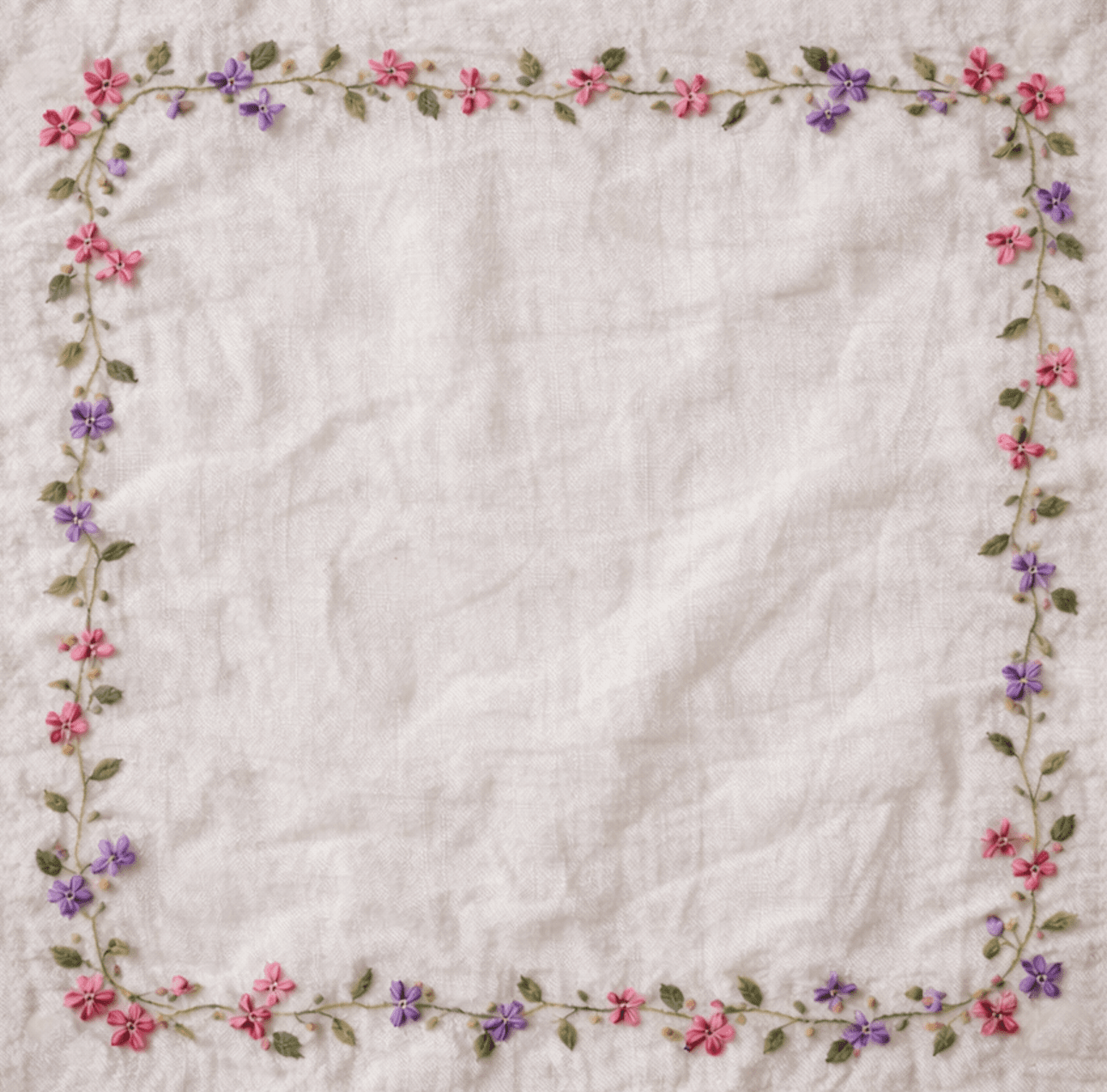
At seventy-three, some memories return with the simple clarity they had when they first happened. This one is from when I was eleven.
Back then, I delivered The New York Post door-to-door. That meant a few singles and always a pocket full of quarters, nickels, and dimes. My wallet had a little coin compartment with a metal snap that never stayed closed, so most of my change lived loose in my pockets, clinking when I walked.
My mother—who I adored—used to say she wished she had something from Saks Fifth Avenue. It was a dream store. We were a Gimbels, Korvette’s, and Alexander’s family.
So for her birthday, with my paper-route money, I decided I would go to Saks and get her something. At eleven, I didn’t know enough to be afraid. I just knew she wanted it.
I took the Q13 bus to the IRT and went into the city. Everyone in New York knew what that meant.
When I reached Saks, I expected something like the big stores I knew. Instead, I found two big brass doors. Before I could figure out how to open one, a doorman stepped forward, pulled it open, and smiled. That was the first kindness of the day.
Inside, it was quiet and bright. Not scary—just different enough that I slowed down, taking everything in.
A woman behind a counter noticed me. Her red nail polish is the thing I remember most—
that, and how she leaned a little closer when she spoke.
“Can I help you?”
“It’s my mother’s birthday,” I said. “She always wanted something from here.”
She asked how much I wanted to spend. That’s when everything inside me tightened.
I opened my wallet slowly, hoping the snap wouldn’t pop open. It did anyway, and a few coins slipped into my hand. Quarters, nickels, dimes. A five-dollar bill and a couple of ones.
“I need enough for the train token home too,” I said.
She didn’t laugh. She just nodded, like that made perfect sense.
“Let’s see what we can find.”
She walked with me to a glass case and used a tiny key to open it. Inside were handkerchiefs—soft, folded squares. She lifted them one by one and let me look.
One had tiny purple flowers in the corner.
“It’s pretty,” I said.
“I think so too,” she replied.
“How much is it?”
“Six dollars.”
I counted in my head—quietly. I had enough for the hankie and the token.
“I’ll take it,” I said.
Then she did something I’ve never forgotten.
“Well, if this is your mother’s first gift from Saks Fifth Avenue,” she said, “we should make it special.”
She wrapped it carefully—folded the hankie, placed it in a small box, added soft tissue paper. She tied pink and yellow ribbons, curling the ends with scissors. Then she peeled off a small gold Saks Fifth Avenue sticker and pressed it onto the corner.
She gave me a tiny card. I wrote, “Happy Birthday Mommy. I love you.”
I paid the six dollars—the most I had ever spent—and she put the box into a tiny Saks shopping bag. I held it the whole way home.
When I gave it to my mother, the first thing she said was,
“Where did you get a Saks Fifth Avenue bag?”
“Open it,” I told her.
She lifted the lid, saw the handkerchief—
and she cried.
A soft cry.
The kind I didn’t understand then, but felt all the way through me.
She kept that hankie in her purse—for the rest of her life. Never used it. Just carried it.
When she died, it was still there. I kept it.
Years later, when my daughter got married, I gave it to her as her “something borrowed.”
And when my grandfather—the person who loved me simply and fully—died, I found one of his handkerchiefs with an embroidered H. He kept it in the pocket of his suit coat, folded so the H always showed. I can still picture it—
that clean white square peeking out, always there. Steady and familiar, the way he was.
When my grandson was born, and his name also began with H, I passed it on.
Two small squares of cloth.
Two generations.
And a kindness that has never faded.
At eleven, I didn’t have the words for what that woman at Saks gave me.
At seventy-three, I do:
A moment so gentle
it stayed bright
for the rest of my life.